

MERN vs WordPress in Africa: What Businesses Should Use? 2026
Compare MERN and WordPress for African businesses, including SEO, GEO, CMS, analytics, AI integration, cost, workflows and scalability.
Read this guide to MERN vs WordPressCase study
Trophy Developers built Let’s Talk German as a custom MERN web application that turns structured German-learning content into a subscription-based digital product with user access, video delivery, payments, and content management working together.
Visit live website01 / Overview
Let’s Talk German is a video-learning platform built around structured German lessons and paid digital access. The project required Trophy Developers to treat educational content as part of the product itself rather than as material placed inside a conventional marketing website. Students needed a clear way to discover lessons, sign in, access the content available to them, and move through a media-led learning experience. At the same time, the business needed a system for controlling premium access, managing content, administering users, and operating subscriptions. This made the project a full web-application problem: content, users, permissions, payments, video delivery, and administration had to work as one coordinated system.
02 / Across Devices
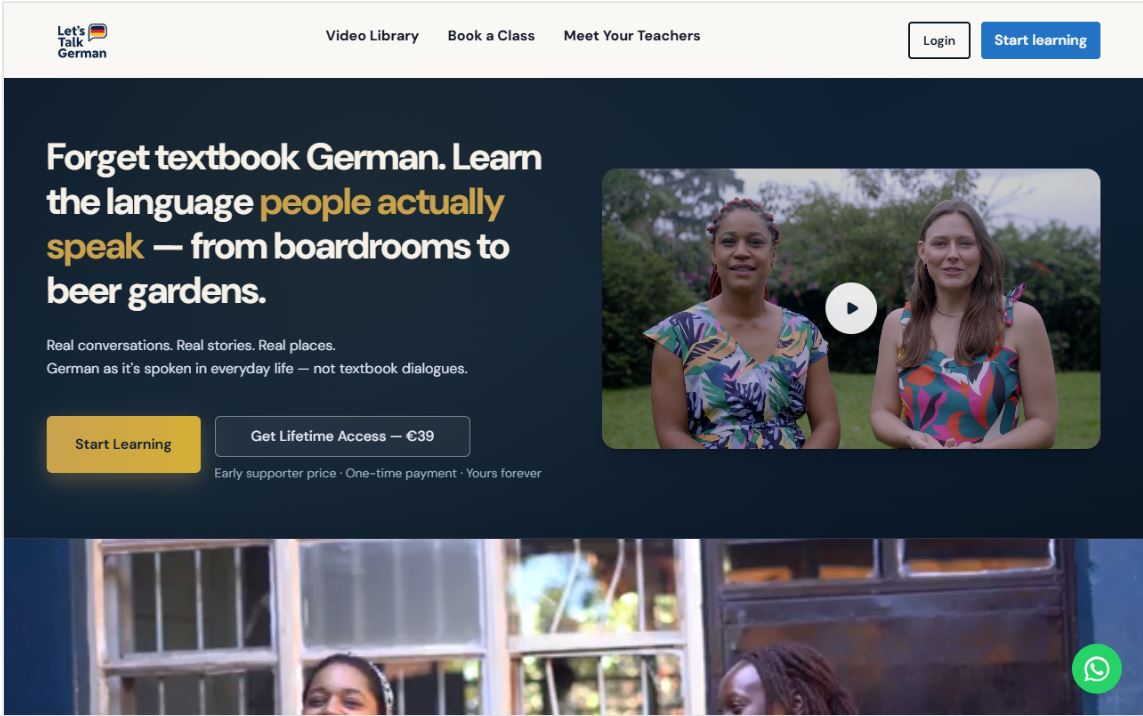
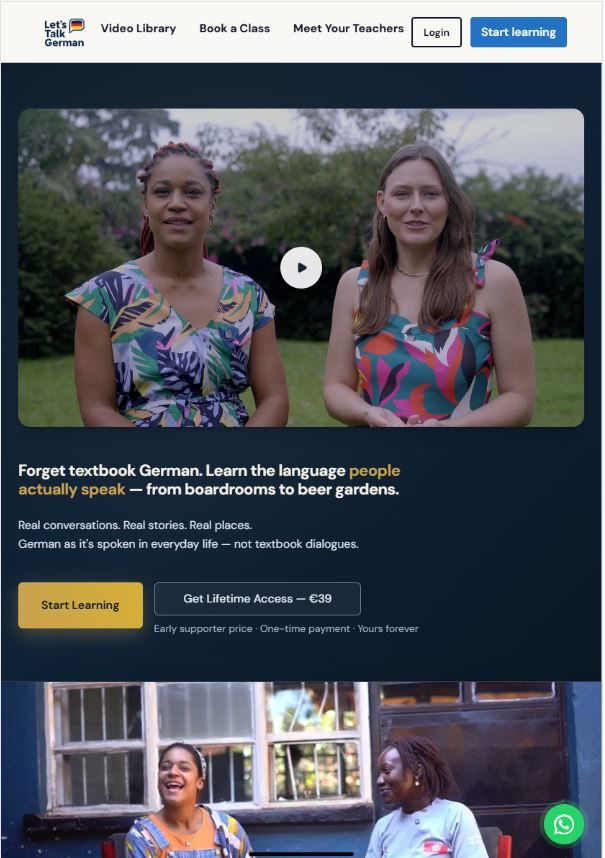
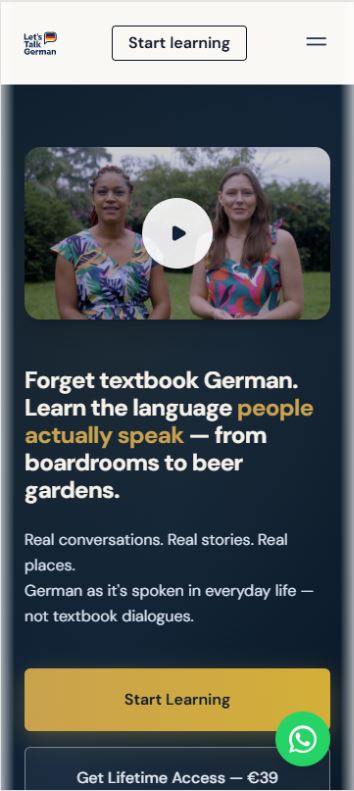
Independent captures show how the finished work holds together from desktop to mobile.
03 / Challenge & Approach
The challenge
What needed to changeLet’s Talk German already had educational value in its German-learning content, but the business needed more than a conventional website. The product had to organise video lessons, authenticate users, protect premium content, manage subscriptions, and give administrators control over the learning experience. The challenge was to make content part of the software architecture. Lesson structure, user state, payment status, access rules, video delivery, and administration could not operate as disconnected features if the platform was going to support a coherent learning journey and a subscription business model. The project also had a delivery constraint. The original plan was four months, so the implementation needed a disciplined MVP scope that could prioritise the workflows required to launch the service without losing the architecture needed for continued development.
Our approach
How the experience was shapedProduct planning began with the learning journey. Trophy Developers mapped how lessons should be organised, how students would enter the platform, how authentication should work, and which content should depend on an active subscription. The interface was refined in Figma, building on early concepts and turning them into a more structured product experience. The media-led interface gives video content a clear browsing model while preserving the distinction between public, authenticated, and premium states. The solution architecture connected React.js on the frontend with Node.js and Express.js services, MongoDB for application data, Stripe for subscription workflows, and Bunney.net for video delivery. A custom CMS provides administrative control over learning content and operational data instead of requiring each update to be handled directly in application code. An MVP-first delivery model kept the initial release focused on the commercial and learning workflows required to operate the service. This reduced the original four-month delivery plan to two months while retaining a foundation for future product development.
Delivered solution
What Trophy Developers implementedTrophy Developers began with the learning journey and the content model. Early concepts were refined in Figma so lesson discovery, member access, video navigation, and subscription states could be considered before the full-stack implementation was committed. The application was then developed using React.js, Node.js, Express.js, and MongoDB. Stripe was integrated for subscription workflows, Bunney.net was connected for video delivery, and a custom CMS was built so the business could manage learning content, users, and subscription-related operations. An MVP-first delivery strategy kept the first release focused on the workflows the business needed to operate: structured learning content, authentication, protected premium access, subscription payments, video delivery, and administration. That approach enabled delivery in two months instead of the original four-month plan.
04 / Showcase
Real page captures let the work speak for itself.
Development
The frontend was built in React.js, with Node.js and Express.js providing backend services and MongoDB storing application data. This MERN architecture supports the authenticated product behaviour required for user accounts, access control, content delivery, and administrative workflows. Stripe is integrated into the subscription flow, with backend validation used to control access to premium learning content. Bunney.net handles delivery of the video-learning assets, while the custom CMS allows the business to organise and manage the content behind the learner experience. The application was deployed on a VPS, giving the project a controlled runtime for the full-stack system rather than treating hosting as a separate afterthought. Development focused first on the core operating workflows and then on presenting those workflows through a responsive media-led interface. The project was initially expected to take four months. By defining an MVP around the essential learning, membership, payment, video, and administration requirements, Trophy Developers delivered the working platform in two months.
05 / Outcomes
06 / Next Project
Next case study
AGRISERV Uganda Website DesignView project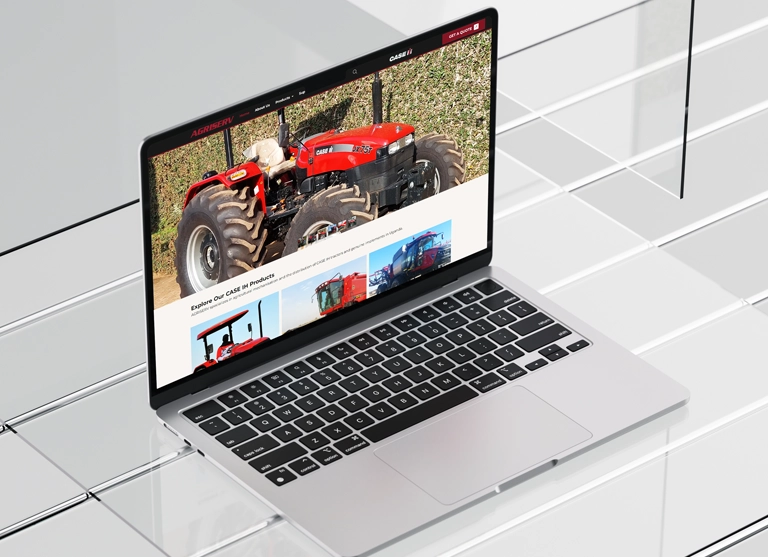
Have a similar challenge?
07 / FAQ
Let’s Talk German is a video-learning platform for structured German lessons delivered through a custom digital application with user accounts, subscription access, video delivery, and administrative controls.
The application uses React.js, Node.js, Express.js, and MongoDB. Stripe supports subscription workflows, Bunney.net provides video delivery, and the platform is deployed on a VPS.
The project required application-level functionality including user authentication, protected premium content, subscription state, custom administration, and integrated learning workflows. Those requirements were better suited to a purpose-built web application architecture.
Bunney.net is used for delivery of the platform’s video-learning content, while the custom CMS controls how that content is organised and managed.
Stripe is integrated into the subscription workflow, and backend validation is used to control access to premium learning content based on subscription state.
Yes. The custom CMS provides administrative control over learning content, users, and subscription-related operations.
The project was initially planned for four months. An MVP-first development strategy prioritised the essential learning, membership, payment, video, and administration workflows and enabled delivery in two months.
Yes. The architecture should be based on the specific content model, users, permissions, payments, integrations, administration needs, and operational workflows required by the business rather than copying this implementation directly.
Practical insights
Compare MERN and WordPress for African businesses, including SEO, GEO, CMS, analytics, AI integration, cost, workflows and scalability.
Read this guide to MERN vs WordPress
Compare mobile apps vs websites in Uganda and learn when your business needs a website, an app, or both for growth, sales, customer…
Read this guide to Mobile App Development
Why Ugandan business websites and apps underperform after launch, and how strategy, SEO, content, analytics, UX and continuous improvement…
Read this guide to Website Problems
A practical guide to payment gateways in Uganda for Mobile Money, cards and global payments, including secure integration for e-commerce…
Read this guide to Mtn Momo API
A practical guide to mobile app development in Uganda covering strategy, UX, development, security, testing, launch, analytics…
Read this guide to Mobile App Development
Plan payments, delivery, stock, returns and checkout before building an online store that can scale with your business.
Read this guide to Online Store Planning