

MERN vs WordPress in Africa: What Businesses Should Use? 2026
Compare MERN and WordPress for African businesses, including SEO, GEO, CMS, analytics, AI integration, cost, workflows and scalability.
Read this guide to MERN vs WordPressCase study
Trophy Developers designed and developed a content-led WordPress website for AGRISERV Uganda, structuring agricultural products, services, and company information around customer understanding, search visibility, and enquiry.
Visit live website01 / Overview
AGRISERV Uganda required a website that could do more than establish an online presence. It needed to explain the business, organise agricultural products and services, and help prospective customers move from initial discovery to a relevant next step without forcing them to interpret disconnected information. Trophy Developers started with the content because the usefulness of a business website depends on what customers can understand from it. We considered what information deserves priority, how related subjects should be grouped, and where an enquiry or other business action should naturally follow from the content. That content model became the foundation for the WordPress website. Navigation, page hierarchy, responsive layouts, headings, and calls to action were shaped around the information AGRISERV needs to communicate rather than around a decorative template.
02 / Across Devices
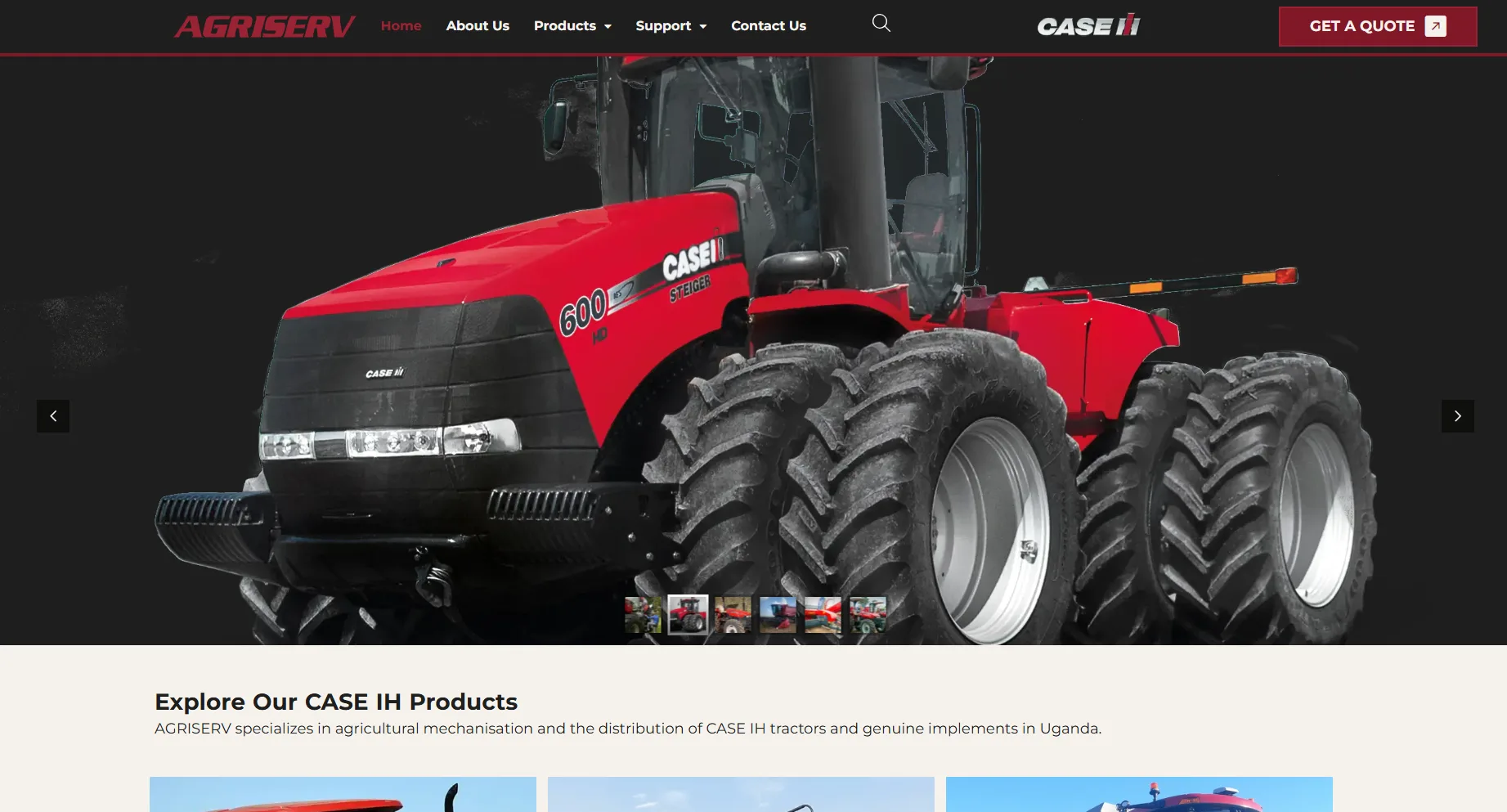
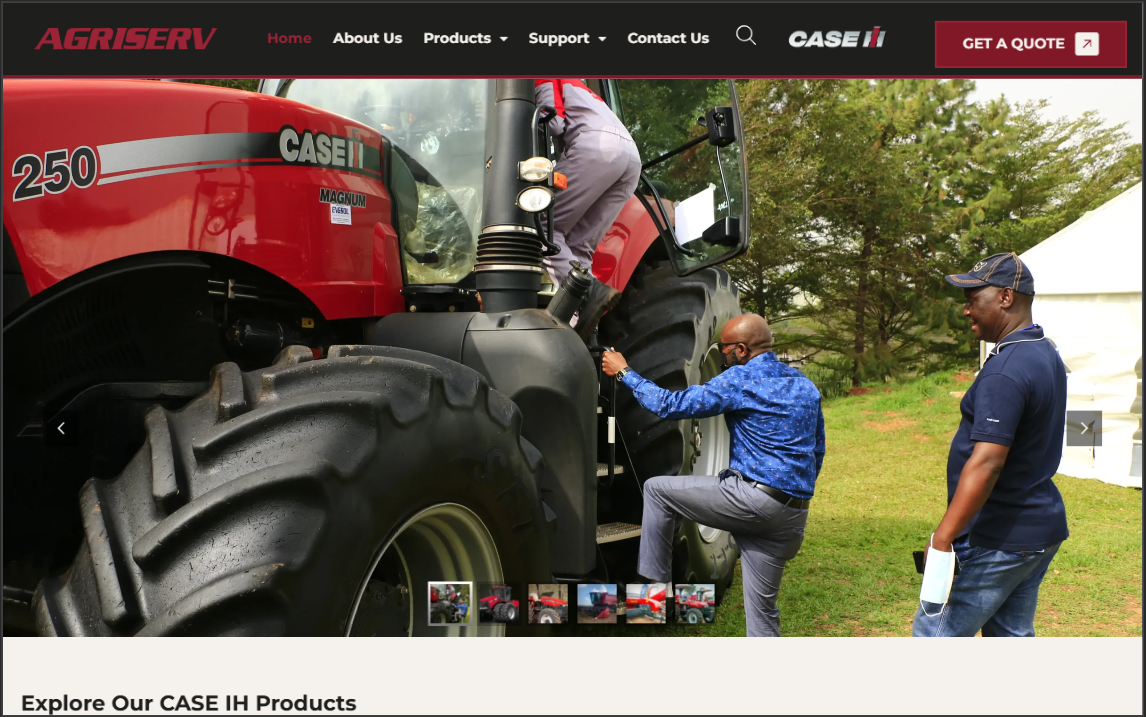
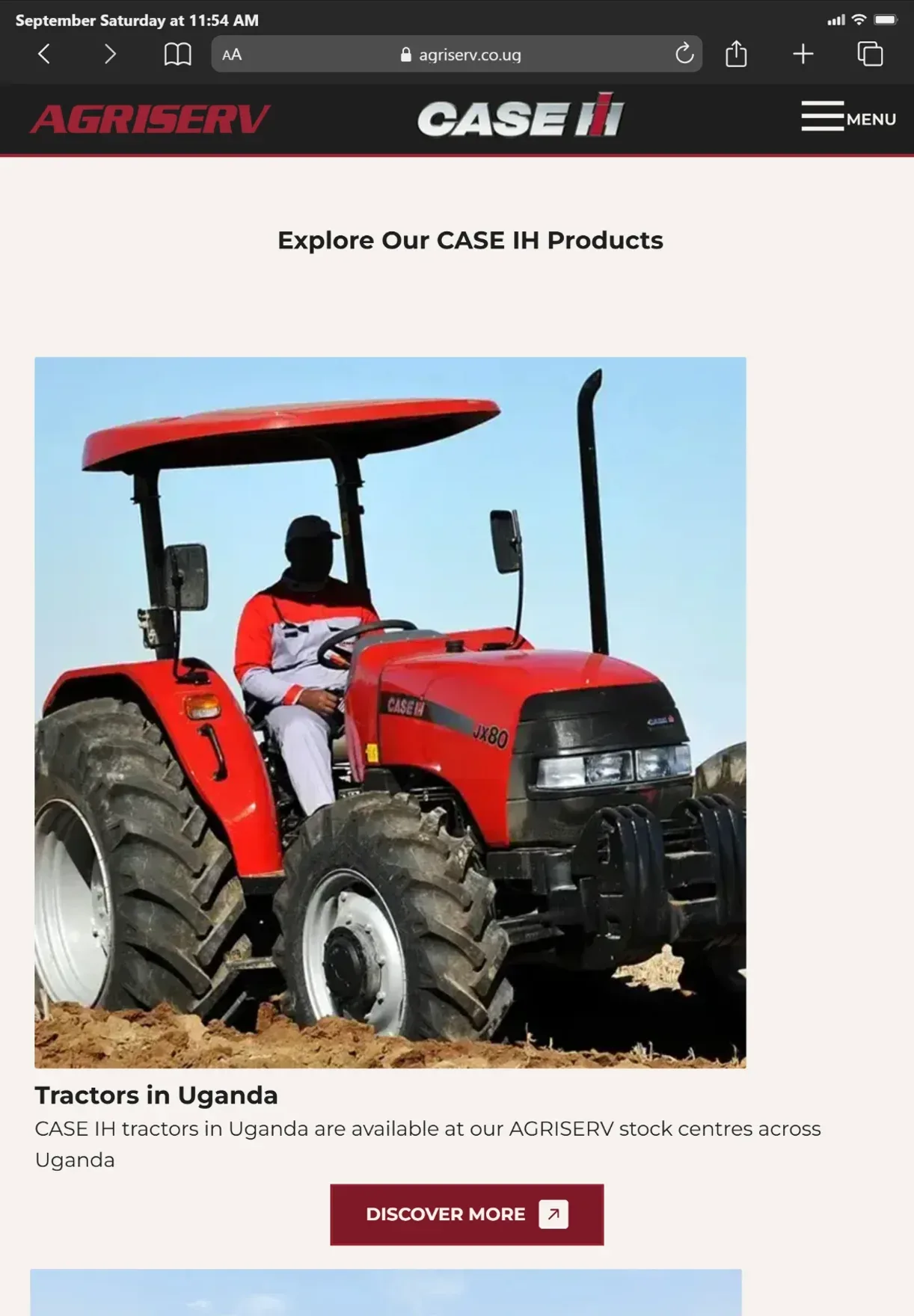
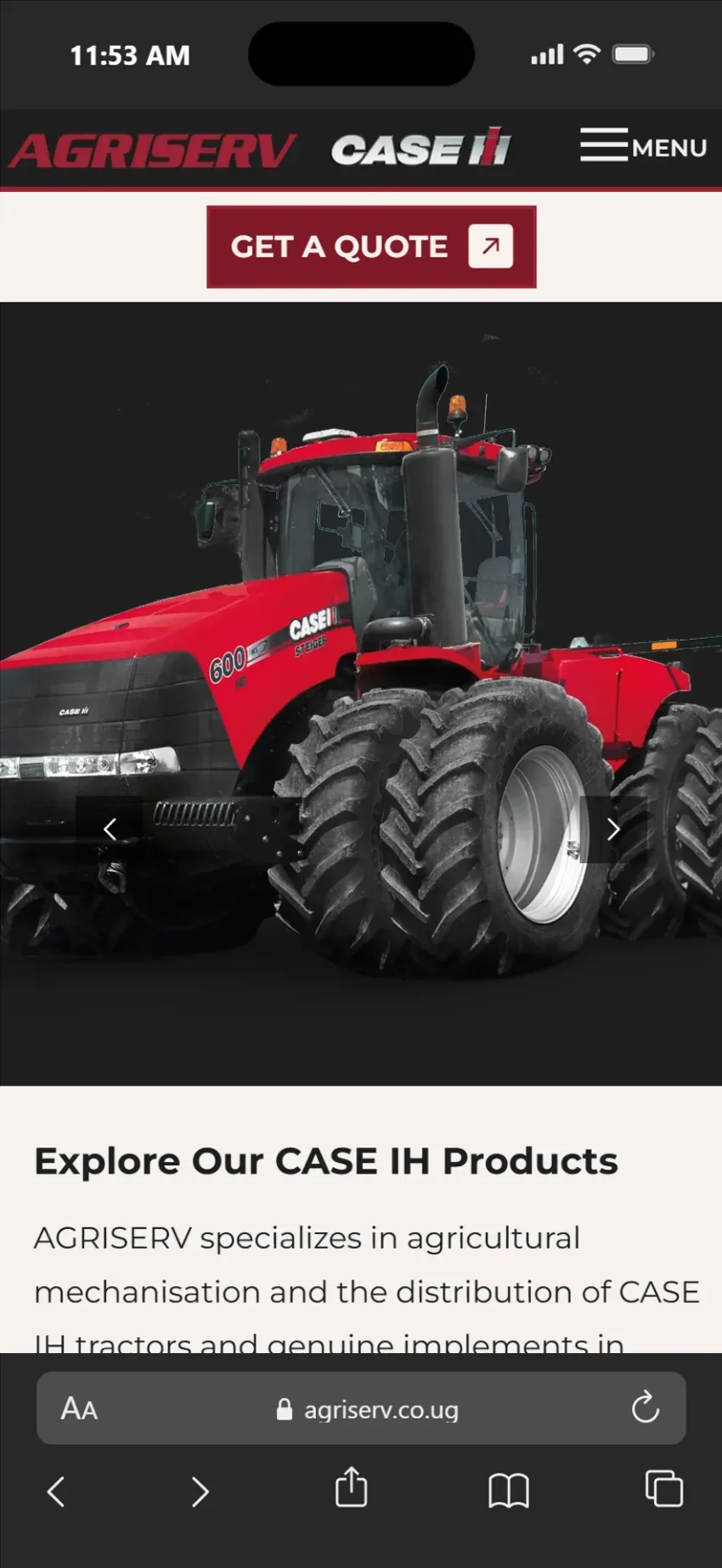
Independent captures show how the finished work holds together from desktop to mobile.
03 / Challenge & Approach
The challenge
What needed to changeAGRISERV needed more than a visual refresh. The website had to turn business information into a clear customer journey so people could understand what the company offers, identify relevant agricultural products or services, and know how to take the next step. The challenge was therefore not simply how the interface should look. It was how to organise the content so the website could communicate the business clearly across desktop and mobile devices while remaining useful as AGRISERV adds and updates information over time.
Our approach
How the experience was shapedThe strategy was to make the website easier to understand before trying to make it more visually impressive. Content was organised around practical customer questions: what AGRISERV provides, which product or service may be relevant, what the business needs a visitor to understand, and how that visitor can continue the conversation. This hierarchy informed navigation labels, section order, page relationships, headings, internal links, and calls to action. It also creates clearer topical context for search engines and AI-assisted discovery systems because important subjects are presented within an intentional information structure instead of being distributed across unrelated page elements. The final solution uses WordPress to connect this content architecture to a maintainable publishing workflow. Responsive layouts keep the hierarchy intact across desktop, laptop, tablet, and mobile devices, while reusable page structures give AGRISERV room to extend products, services, and supporting content without rebuilding the website each time the information grows.
Delivered solution
What Trophy Developers implementedTrophy Developers approached the project as a content and information-architecture assignment first. We defined the role of the website, the questions its pages needed to answer, and the relationship between service discovery, business credibility, and enquiry before translating that structure into the visual interface. The delivered WordPress experience uses clear content hierarchy, responsive layouts, and practical calls to action so design supports the information rather than competing with it. The CMS gives AGRISERV a maintainable publishing environment for continued content development.
04 / Showcase
Real page captures let the work speak for itself.
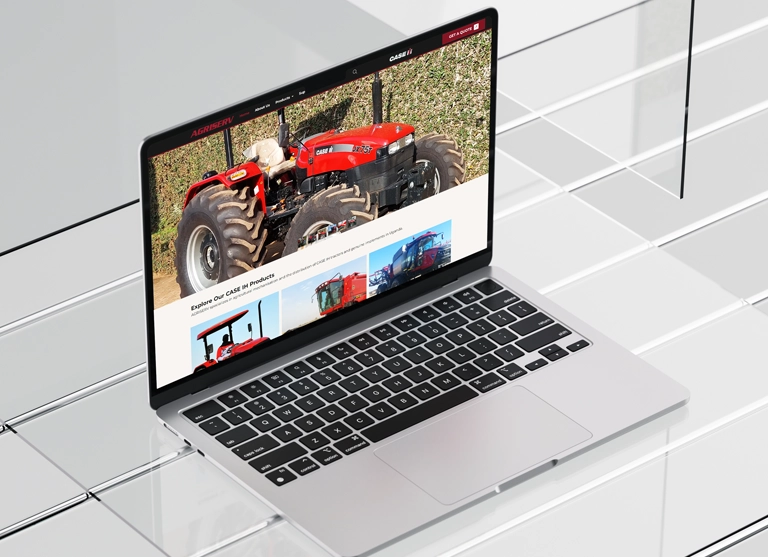
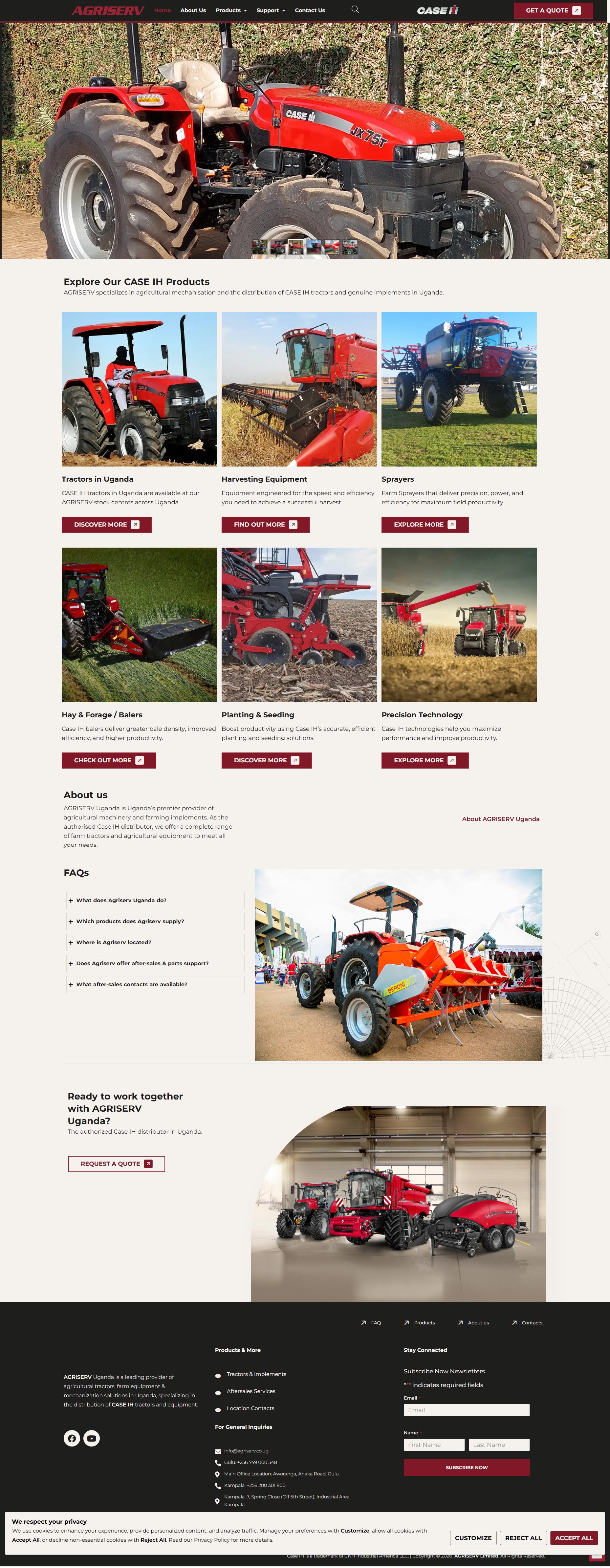
Development
The website was implemented on WordPress so AGRISERV can manage business content through an established CMS while retaining a consistent page structure. The development work translated the approved information hierarchy into responsive layouts rather than treating desktop design as the only source of truth. Reusable content patterns support agricultural product, service, and company information across the site. This reduces the risk of individual pages drifting into unrelated layouts as new content is introduced and gives the organisation a clearer editorial framework for ongoing publishing. The technical and content structure also provides a stronger base for continued SEO and GEO work. Search visibility is treated as an outcome of useful content, clear page intent, semantic hierarchy, internal relationships, and ongoing improvement rather than as a layer of repeated keywords added after launch.
05 / Outcomes
06 / Next Project
Next case study
SIROCCOI Engineering Website RedesignView project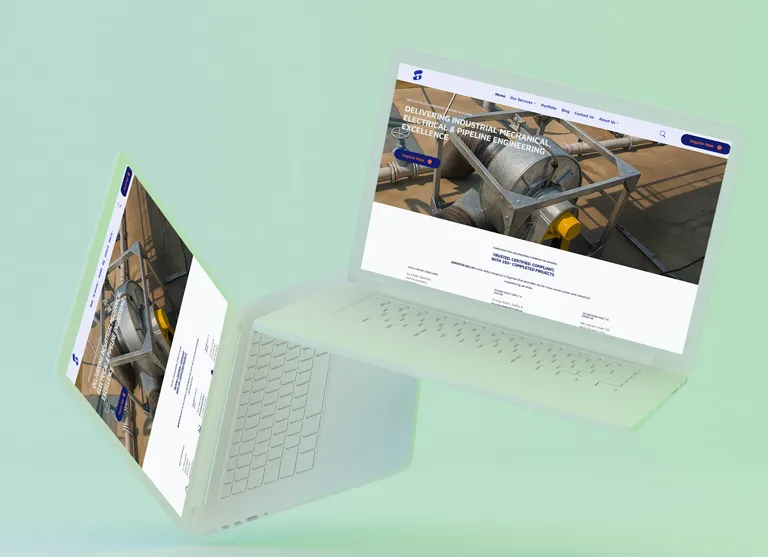
Have a similar challenge?
07 / FAQ
AGRISERV needed customers to understand agricultural products, services, and business information before deciding what to do next. Trophy Developers therefore organised the content before finalising the interface so design could support understanding, trust, discovery, and enquiry.
The website was developed on WordPress, giving AGRISERV a maintainable content-management platform for updating and extending business information over time.
Yes. The website uses responsive layouts so the content hierarchy and customer journey remain usable across desktop, laptop, tablet, and mobile devices.
SEO was addressed through content hierarchy, clearer page intent, headings, internal relationships, and a search-ready site structure. The website provides a foundation for ongoing optimisation rather than treating SEO as keyword repetition added after development.
The content is organised into clearer subjects, relationships, and page purposes that can help search engines and AI systems interpret the business more accurately. GEO still depends on continued useful content, entity clarity, authority, and external evidence beyond the website itself.
Yes. WordPress provides the CMS layer for maintaining and extending business content while the underlying page structures help keep that content consistent.
Yes. The same content-led process can be adapted to agricultural companies, manufacturers, distributors, and other organisations that need complex products or services communicated more clearly online.
Practical insights
Compare MERN and WordPress for African businesses, including SEO, GEO, CMS, analytics, AI integration, cost, workflows and scalability.
Read this guide to MERN vs WordPress
Compare mobile apps vs websites in Uganda and learn when your business needs a website, an app, or both for growth, sales, customer…
Read this guide to Mobile App Development
Why Ugandan business websites and apps underperform after launch, and how strategy, SEO, content, analytics, UX and continuous improvement…
Read this guide to Website Problems
A practical guide to payment gateways in Uganda for Mobile Money, cards and global payments, including secure integration for e-commerce…
Read this guide to Mtn Momo API
A practical guide to mobile app development in Uganda covering strategy, UX, development, security, testing, launch, analytics…
Read this guide to Mobile App Development
Plan payments, delivery, stock, returns and checkout before building an online store that can scale with your business.
Read this guide to Online Store Planning