
Top Web Design Company in Uganda | App Development & Digital Marketing
May 8, 2026
Discover the Top Web Designer in Uganda 2026
June 17, 2026

A Redesign Story That Taught Us a Serious Lesson
Website redesign sounds simple until a real business depends on the outcome. Many people think redesign means changing colors, replacing images, improving fonts, and making the homepage look fresh. That is only the surface.
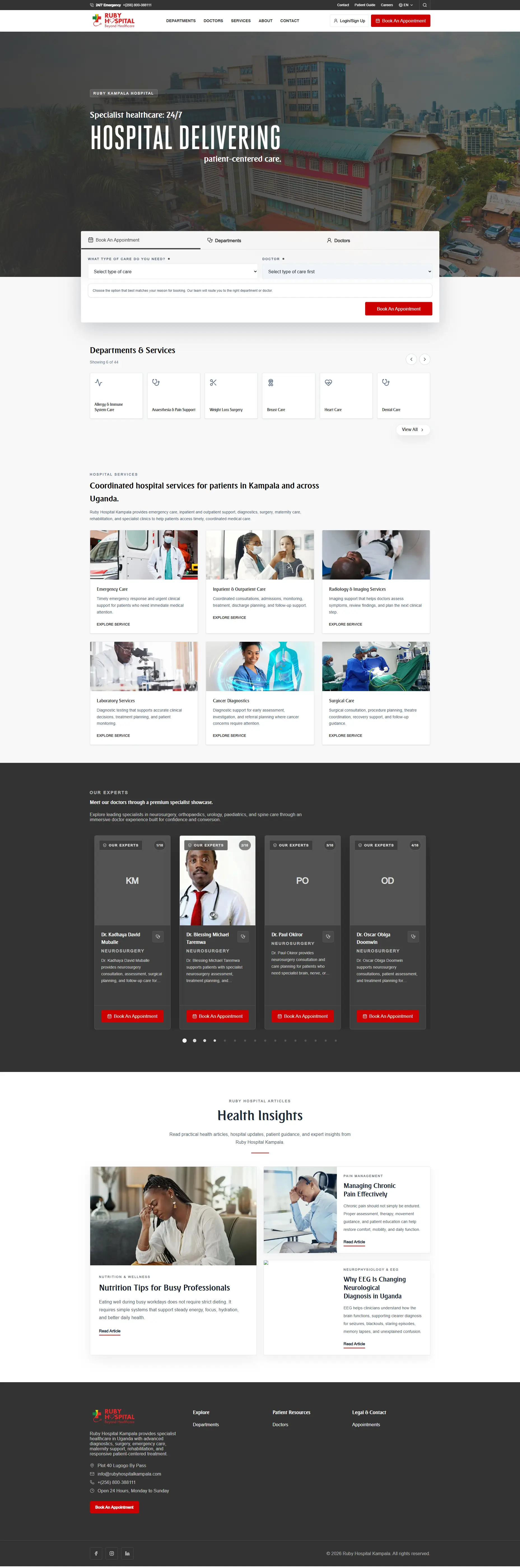
At Trophy Developers, the Ruby Hospital Kampala project taught us that redesign is deeper than appearance. It affects SEO, user trust, content structure, website architecture, technology, internal workflows, and future growth.
Old Technology for a new web redesign?
The first redesign direction was based on WordPress. We worked with the same technology because that was the expected foundation. At that stage, the goal looked straightforward. Improve the existing website, refresh the design, and support the hospital’s online presence.
But as discussions continued, the hospital proposed more features. They needed better appointment handling, improved content control, stronger performance, better user experience, and a system that could support future growth. The project was no longer a simple WordPress redesign. It had become a digital platform challenge.
The final redesign was rejected by the Director and CEOs. After that, Ruby Hospital hired another company. That company used a different technology stack, including Webflow, Webflow Ecommerce, Google Analytics, GA4, Facebook Pixel, Google Tag Manager, Cloudflare, Open Graph, Webpack, HTTP/3, Google Fonts, and Chatway live chat.
That redesign was also rejected.


Ruby Hospital later came back to Trophy Developers and requested another redesign. This time, we did not approach it as a visual refresh. We prepared a proposal that exposed the risks of the existing direction. We looked at user experience, SEO, content structure, technology limitations, appointment flow, branding, and scalability.
The new system was built with a stronger foundation. We used Turborepo, Next.js, NestJS, Fastify, TypeScript, pnpm, Tailwind CSS, Nginx, Ubuntu, Open Graph, Turbopack, priority hints, Lucide icons, and a custom headless CMS.
We tested everything. We focused on QA, error prevention, versioning, optimized typography, clean layout UX, easy appointment booking, branding, and long-term maintainability.
As of 31 May 2026, the new system is not yet live. The expected launch is 12 June 2026. But the important part is this: the team now loves the new direction because the redesign finally matches the hospital’s real needs.
This experience confirmed one major lesson. During website redesign, you must respect what already exists while preparing the business for what comes next.
Website Redesign Is Not Just a New Look
A proper redesign is not only about making a website look modern. It should improve how the website works, how users move through it, how search engines understand it, and how the business manages it.
A design refresh may only update fonts, colors, imagery, and small visual details. A redesign goes deeper. It may improve page structure, content flow, user journeys, calls to action, SEO, accessibility, speed, and conversion paths.
A rebuild goes even further. It starts from a new foundation, often with new technology, new architecture, new content management, and new workflows.
The correct choice depends on one question:
Is your current website fixable, or is it fundamentally flawed?
Why Wiping a Website Can Damage SEO
Some businesses start fresh without protecting their existing website value. That can be risky.
If old URLs disappear, users may land on broken pages. Search engines may continue showing old links for some time. Bookmarked pages may fail. Websites that previously linked to you may send visitors to 404 errors.
To a search engine, this creates confusion. To a customer, it creates doubt.
A broken link can make a serious company look careless. In some industries, it can make the business look unreliable. If a customer clicks a service page, appointment page, product page, or contact page and finds an error, trust drops immediately.
That is why a redesign should include reasonable SEO cleanup, not careless deletion.
Use a Staging Site Before Making Major Changes
A professional redesign should not happen directly on the live website.
A staging site allows the new design, content, and features to be built safely while the old website remains available to users. This protects the business from downtime, broken layouts, unfinished pages, and public errors.
It also allows teams to test the redesign before launch.
At Trophy Developers, staging, testing, and QA matter because users do not care whether the site is “almost ready.” They only experience what is live. A broken public website can damage confidence quickly.
When a Redesign Is the Better Option
A redesign is usually better when the existing website still has value.
This may apply when the website already has rankings, useful content, traffic, backlinks, bookmarked pages, and a structure that can still support the business with improvements.
A redesign can help you refresh branding, improve functionality, clean up weak areas, and future-proof the website without rebuilding everything from zero.
This can save time and reduce cost because you are building on what already works.
A redesign is a good option when:
- Your website looks outdated but still functions.
- Your pages already rank on Google.
- Your CMS still supports your content needs.
- Your brand needs a visual update.
- Your user journey needs improvement.
- Your website needs speed, SEO, or accessibility updates.
When Starting Fresh Is the Better Option
Starting fresh makes sense when the current website limits the business.
If the platform cannot support new features, the site is too slow, the CMS is frustrating, the structure is confusing, or the business needs advanced workflows, a redesign may not be enough.
This is what happened with Ruby Hospital. The challenge moved beyond design. The hospital needed a system that could support services, doctors, departments, articles, appointment requests, admin workflows, SEO, previewing, publishing, and future growth.
At that point, starting fresh with stronger architecture became the better decision.
A rebuild is often better when:
- The current technology is outdated.
- The website is hard to maintain.
- The structure blocks growth.
- The business needs a custom CMS.
- The website must connect with apps, CRM, payments, or automation.
- The user experience is broken at the foundation.
Run a Technical Audit Before Deciding
The decision should not be based on emotion. It should be based on evidence.
Before choosing redesign or rebuild, run a technical audit. This helps you know what to keep, what to improve, and what to replace.
A good audit should check:
- Important URLs
- Existing rankings
- Backlinks
- Website speed
- Mobile usability
- Broken pages
- Security issues
- CMS limitations
- Conversion paths
- Content gaps
This prevents unnecessary loss. It also helps the business invest in the right direction.
Website Architecture Comes Before Visual Design
Website architecture is the structure behind the website. It defines how pages connect, how users navigate, and how search engines understand the site.
If the architecture is weak, even a beautiful design will struggle.
For Ruby Hospital, architecture mattered because patients needed to find services, doctors, departments, appointment options, emergency information, and patient guidance quickly.
For a business website, architecture helps users understand what you offer, why it matters, how to trust you, and what to do next.
Good architecture improves user experience, SEO, and lead generation.
Information Architecture Protects Meaning
Information architecture focuses on content, context, and user understanding.
Many websites fail because information is placed randomly. Pages are created from the company’s internal view, not the customer’s need.
During redesign, content should be planned around real questions:
- What is the visitor trying to solve?
- What information do they need first?
- What proof will help them trust the business?
- What action should they take next?
- Which pages support SEO?
- Which pages support conversion?
A redesign should not only make content look better. It should make it easier to understand.
Stakeholders Must Be Involved Early
A redesign can fail when decision-makers are not aligned.
Directors, CEOs, marketing teams, operations teams, customer-facing staff, and technical teams may all expect different things from the website.
If those expectations are not captured early, approval becomes difficult later.
The Ruby Hospital project showed us that stakeholder clarity is not optional. The people who approve, manage, and use the system must understand the direction before the project goes too far.
This saves time. It reduces revisions. It protects the final result.
Technology Has Changed the Role of Websites
Websites are no longer simple online brochures. A modern website can be a full digital platform.
Today, a serious business may need:
- Custom headless CMS
- Appointment booking
- CRM workflows
- Marketing automation
- SEO controls
- Analytics dashboards
- Role-based admin access
- Mobile app readiness
- Fast publishing workflows
This is why the technology choice matters.
WordPress, Webflow, Next.js, NestJS, Fastify, and custom monorepo systems all serve different needs. The goal is not to use technology because it sounds advanced. The goal is to choose what supports the business.
New Roles Are Now Part of Web Redesign
A serious redesign now requires more than one designer and one developer.
Modern projects may need:
- UX strategy
- SEO planning
- Content architecture
- Performance engineering
- QA testing
- Accessibility checks
- CMS planning
- Analytics setup
- Brand system design
This is why professional redesign takes careful planning. More knowledge can delay rushed decisions, but it also prevents expensive mistakes.
Mobile App Design Should Be Considered Early
Some websites later grow into mobile apps. If that possibility exists, the foundation should be prepared early.
This is where Turborepo and monorepo architecture become useful. A monorepo can help organize shared components, design systems, types, validation, API clients, and business logic across web, admin, API, and future mobile applications.
This reduces duplication. It supports consistency. It makes future growth easier.
A business may start with a website, then add a dashboard, mobile app, CRM, ecommerce, or automation. The foundation should not fight that growth.
Scalability Is the Real Goal
A redesign should not only solve today’s problem. It should prepare the business for tomorrow.
Scalability means your system can handle more users, more pages, more content, more services, more integrations, and more workflows without falling apart.
For Ruby Hospital, scalability meant preparing for doctors, departments, services, articles, appointment workflows, admin publishing, SEO, and future improvements.
For another business, scalability may mean online payments, delivery tracking, user accounts, mobile app expansion, or marketing automation.
So, Which One Is Better?
Choose redesign when your current website has value worth protecting.
Choose a fresh rebuild when the foundation is blocking growth.
A redesign is not always cheaper if the base is weak. A rebuild is not always better if it destroys SEO, content value, and user trust without planning.
The right answer comes from audit, strategy, stakeholder alignment, technology assessment, and business goals.
How Trophy Developers Handles Website Redesign
At Trophy Developers, we do not treat redesign as decoration. We treat it as a business growth decision.
Our approach focuses on:
- Studying the current website
- Protecting valuable SEO assets
- Improving website architecture
- Planning content around users
- Choosing the right technology foundation
- Testing performance and usability
- Building scalable systems
- Preparing for future web and mobile growth
This helps businesses move from a basic website to a stronger digital platform.
Conclusion
Website redesign vs starting fresh is not only a design question. It is a business decision.
If your current website is fixable, redesign it carefully. Preserve what works. Clean what is weak. Improve the user experience.
If the website is fundamentally flawed, rebuild it with a stronger foundation.
The goal is not just a better-looking website. The goal is a faster, clearer, scalable, SEO-friendly, and customer-focused digital system.
Next Step
If you are planning a website redesign, begin with an audit. Find out what should be protected, what should be improved, and what should be rebuilt.
Trophy Developers helps businesses redesign websites with strategy, SEO protection, modern technology, stakeholder alignment, and long-term growth in mind.
Frequently Asked Questions
What is the difference between a website redesign and starting fresh?
A website redesign improves an existing website by updating its design, structure, content, or functionality while preserving valuable assets. Starting fresh involves rebuilding the website from the ground up using a new platform, architecture, or technology stack.
Does redesigning a website affect SEO?
Yes. A website redesign can affect SEO if URLs, content, metadata, or site structure change. Proper planning, redirects, sitemap updates, and SEO audits help preserve rankings and traffic during the redesign process.
When should I redesign my website instead of rebuilding it?
A redesign is usually the better option when your website still has a solid foundation, ranks in search engines, and meets most business requirements but needs visual improvements, better user experience, or performance enhancements.
When should I start fresh with a new website?
Starting fresh is often the best choice when your current platform is outdated, difficult to maintain, limits growth, or cannot support new features required by your business.
Can I lose website traffic after a redesign?
Yes. Traffic can decline if important pages are removed, URLs change without redirects, or content is not properly migrated. A well-planned redesign minimizes these risks.
What is a website audit and why is it important before redesigning?
A website audit evaluates your site's SEO, performance, content, user experience, security, and technical health. It helps identify what should be preserved, improved, or rebuilt before making major changes.
What is a staging website?
A staging website is a private copy of your website used to build and test redesign changes before launching them publicly. It reduces risk and prevents disruptions to your live website.
How do broken links affect a website redesign?
Broken links create a poor user experience and can damage SEO. They may cause visitors to encounter error pages and reduce trust in your business.
What role does website architecture play in a redesign?
Website architecture determines how pages are organized and connected. A strong architecture improves navigation, search engine visibility, and the overall user experience.
What is information architecture in web design?
Information architecture focuses on organizing content so users can find information quickly and easily. It helps create clear user journeys and supports both SEO and conversions.
How can a website redesign improve user experience?
A redesign can improve page speed, navigation, mobile usability, accessibility, content clarity, and calls to action, making it easier for visitors to complete desired actions.
Should a website redesign consider future mobile applications?
Yes. Businesses planning future mobile apps should build a scalable foundation that supports shared functionality, APIs, and consistent user experiences across platforms.
Why is scalability important when redesigning a website?
Scalability ensures your website can support future growth, including more users, services, content, integrations, and digital products without requiring another major rebuild.
What are the signs that my website technology is outdated?
Common signs include slow performance, security concerns, poor mobile experience, difficult content management, limited integrations, and inability to support new business requirements.
How long does a website redesign take?
The timeline depends on the size of the website, content requirements, technology stack, stakeholder feedback, and testing processes. Small redesigns may take weeks, while enterprise projects can take several months.
How does Trophy Developers approach website redesign projects?
Trophy Developers begins with strategy, technical audits, SEO evaluation, content planning, and stakeholder alignment. We focus on protecting existing value while building scalable digital systems that support long-term growth.






![The Real Cost of Website Development in Uganda ([year] Guide)](https://www.trophydevelopers.com/wp-content/uploads/4018147a-web-design-cost-trophy-developers-zaina-office.webp)