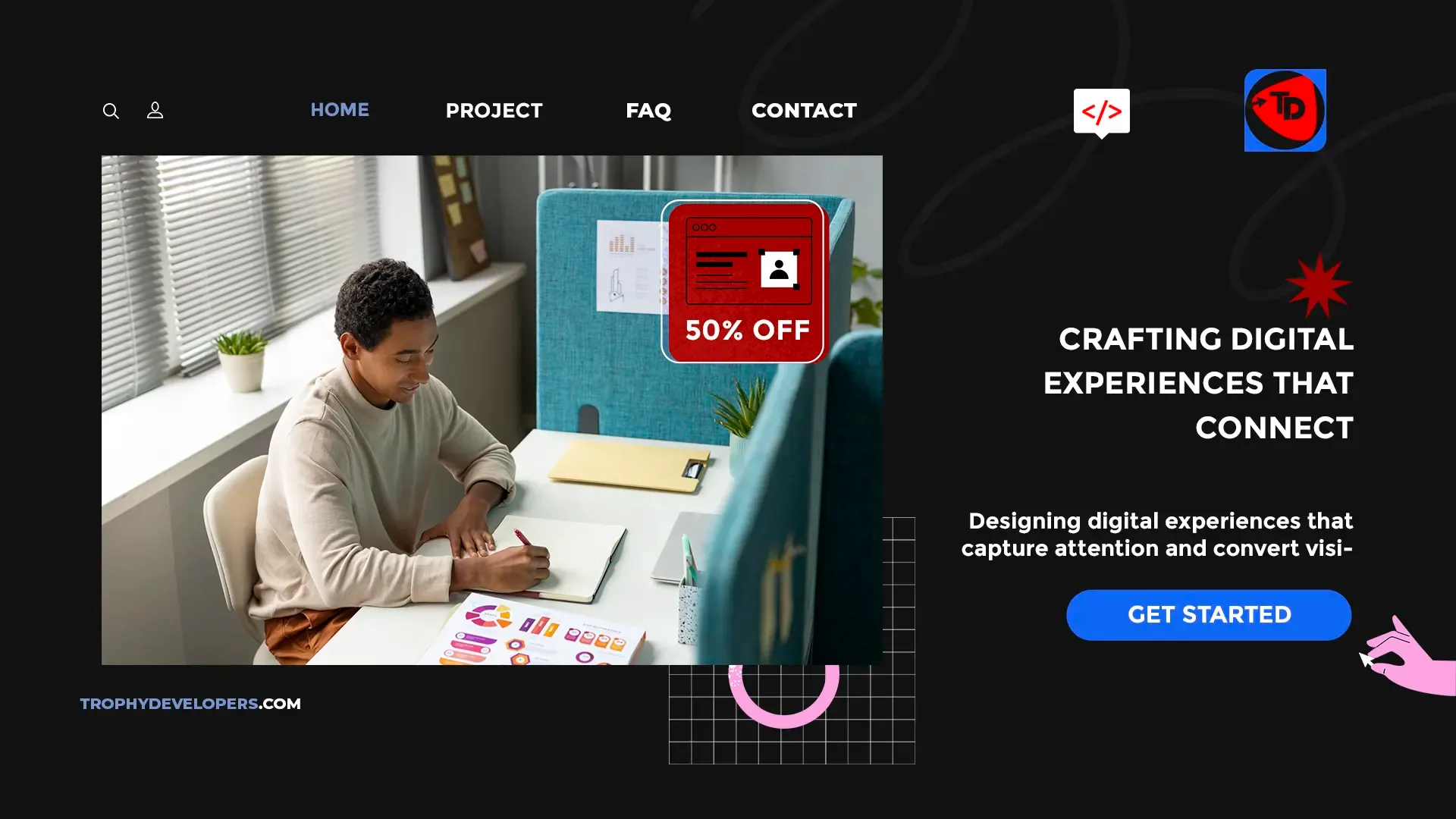
A Clear Web Development Process From Discovery to Launch
Web Development Process | Trophy Developers

Overview
Web Development Process
Business caseWhy Your Business Needs Web Development Process
A successful website project needs more than attractive pages and working code. It needs a clear business goal, agreed responsibilities, structured decisions, useful content, reliable technology and a controlled path from the first discussion to launch. Trophy Developers guides web development projects through a defined process that connects strategy, content, UX, design, development, SEO, GEO, integrations, testing, deployment and post-launch support.
Capabilities
What Web Development Process Includes
What Our Web Development Process Covers
Our web development process defines the work, decisions and responsibilities required to move a website from an initial business requirement to a working digital platform. The exact scope varies between a corporate website, e-commerce platform, service website, portal, landing page or custom digital system, but the core delivery principles remain consistent.
Discovery: Understand the Business Before Building the Website
We start with the business, not the layout. Before designing screens or writing code, Trophy Developers works to understand what the website needs to achieve, who it needs to serve and what action visitors should take. We review the business model, products or services, customer groups, existing digital presence, current website problems, competitor environment and internal operational requirements. For an existing website, discovery may also include reviewing current pages, content, analytics, search visibility, conversion paths, technical limitations and integrations.
Strategy and Project Planning
Once we understand the business requirement, we turn it into a practical website plan. This stage defines the scope, priorities and major decisions before design begins. We establish what the website needs to contain, how users should move through it, what functionality is required and how each important page supports a business objective. We also identify dependencies such as missing content, third-party systems, payment providers, domain access, hosting, brand assets, approval processes or external stakeholders.
Sitemap and Information Architecture
A website should make information easy to find. We organise the website into a clear page structure based on customer needs, business priorities and search intent. The sitemap may include service pages, product pages, company information, contact journeys, resource sections, case studies, location pages, industry pages and other content required by the project. We also consider navigation relationships between pages so duplicate pages, weak content architecture and unnecessary navigation complexity are reduced before development begins.
Customer Journeys and Conversion Planning
Every important page should have a purpose. We define what visitors need to understand and what action they should take next. Depending on the business, that action may include requesting a quotation, making a purchase, calling the company, starting a WhatsApp conversation, completing an application, booking an appointment, downloading information or contacting a specific department. We then structure pages, calls to action and forms around those journeys.
SEO and GEO Planning Before Development
Search visibility should not be added after the website has already been built. During planning, we identify important services, topics, locations, questions and customer search patterns that should influence the site structure. We consider page titles, headings, internal linking, content hierarchy, crawlable navigation, structured data opportunities, technical SEO requirements and answer-focused content that can support traditional search engines and generative answer systems. For existing websites, we also identify URLs and search assets that need to be protected during redesign or migration.
Content Planning and Preparation
Design works better when it reflects real content. Before or during the design stage, we define what information each important page needs. This may include service explanations, product information, company evidence, customer questions, case studies, testimonials, team information, locations, calls to action, images and other supporting material. Where Trophy Developers is responsible for copywriting, we develop content around the customer decision journey rather than filling predefined design boxes with generic text. Where the client provides content, we organise the submission process so content gaps do not silently delay development.
UX and Interface Design
Once the structure and content direction are clear, we design the website experience. We establish visual hierarchy, content emphasis, page flow, navigation behaviour, interface patterns and the relationship between information and calls to action. Design decisions should help visitors understand the business faster and complete important actions with less friction. We also consider reusable patterns that keep the experience consistent across service pages, product pages, articles and other sections.
Responsive Design Across Devices
Responsive design means more than shrinking the desktop layout. We consider how navigation, typography, media, forms, content hierarchy, buttons, tables, cards and interactive components behave across different screen sizes. Important customer actions need to remain visible and usable on mobile, tablet, laptop and desktop devices. Responsive behaviour becomes part of the design and development system rather than a final patch before launch.
Client Design Review and Approval
We organise design feedback into defined review stages. The client reviews the proposed direction and provides consolidated feedback from the relevant decision-makers. This makes it easier to distinguish required corrections from new requests or changes in project scope. Once the agreed design direction has been approved, we proceed into development with a clearer reference point.
Website Development
Development converts the approved design and requirements into a working website. Trophy Developers builds the required frontend interfaces, page structures, components and server-side functionality based on the agreed technology and scope. Development may include content management, forms, search functionality, user accounts, APIs, e-commerce features, dashboards, integrations or other functionality required by the project. The finished system must work reliably for real users and real business processes, not simply reproduce a visual mockup.
Content Management System Setup
Where the website requires ongoing content management, we configure an appropriate CMS or administrative interface. The goal is to make routine content changes manageable without exposing unnecessary technical complexity. Depending on the system, editors may manage pages, services, products, articles, media, FAQs, metadata or other structured content. We also define which changes belong in the CMS and which changes require development work.
Forms, APIs and Business Integrations
Many websites depend on systems outside the visible interface. A project may need contact forms, CRM connections, payment services, analytics, email platforms, booking tools, maps, authentication, WhatsApp, third-party APIs or internal business systems. We implement the integrations included in the agreed scope and test the relevant data flow. For business-critical integrations, we also consider failure states so users receive useful feedback when an external system becomes unavailable.
E-Commerce and Transaction Testing
For e-commerce projects, development does not stop when products appear on the screen. We test the complete commercial journey. That can include product discovery, variations, pricing, cart behaviour, checkout, payment processing, order confirmation, notifications and administrative workflows. Where external payment providers are involved, we identify which parts Trophy Developers controls and which parts depend on the provider. The same principle applies to bookings, registrations and other transactional website workflows.
Performance Optimisation
Website performance affects usability, conversion and search visibility. During development, we review factors such as image delivery, JavaScript, CSS, fonts, caching, third-party scripts, rendering behaviour and server responses. Performance work should match the actual architecture rather than rely only on superficial optimisation. We also pay attention to the pages and interactions that matter most to customers.
Accessibility and Usability Checks
A professional website should be usable by as many people as reasonably possible. We review important interface behaviours such as headings, keyboard interaction, form labels, contrast, focus states, button clarity, image alternatives and responsive navigation. Accessibility is most effective when considered during design and development rather than added as a final checklist item.
Quality Assurance and Cross-Device Testing
Before launch, we test the website as a complete system. Testing can cover links, navigation, forms, responsive behaviour, major browsers, page layouts, integrations, content, analytics, redirects and other project-specific requirements. We also test unusual or failure states where appropriate. A contact form should be tested as a submission journey, a checkout should be tested as a transaction flow and a mobile menu should be tested as an interaction.
Client Review Before Launch
The client reviews the developed website against the approved scope. This review focuses on whether the agreed pages, functionality and content have been implemented correctly. We consolidate final corrections before launch. Requests that materially change approved requirements may be treated separately so launch is not indefinitely delayed by expanding scope.
Launch Preparation
Launching a website involves more than making it publicly visible. We confirm the elements required for production, which may include domain configuration, DNS, hosting, SSL, redirects, analytics, forms, search controls, structured data and environment configuration. For replacement websites, we pay particular attention to preserving important URLs and redirecting retired pages where required. We also verify that staging or development restrictions do not accidentally remain on the production website.
Website Deployment
Once launch requirements are ready, we deploy the approved website to the production environment. Depending on the project, this may involve moving the website to production hosting, updating DNS records, connecting the domain, applying SSL certificates, switching environment configuration or coordinating with another infrastructure provider. We then check the live environment rather than assuming that staging behaviour will automatically match production.
Post-Launch Verification
A successful deployment is followed by live verification. We check important pages, forms, navigation, integrations and measurement after the public website becomes active. Where search visibility matters, we also verify important technical signals such as indexability, canonical URLs, redirects and sitemap availability. Post-launch verification catches environment-specific problems that may only appear after production deployment.
Analytics and Measurement
A website should provide evidence about what happens after launch. Where included in the project, we configure or verify analytics and conversion measurement so the business can understand how people use the website. Measurement can help identify which pages attract visitors, which channels produce enquiries, which forms convert, where users leave and which products or services attract the most interest.
Post-Launch Support
Launching the website completes the initial project, not the website's entire lifecycle. Software, content, business requirements and customer behaviour continue to change. Trophy Developers can provide ongoing support for maintenance, updates, security, content changes, technical improvements and performance work according to the agreed support arrangement.
Client Responsibilities During the Web Development Process
A smooth website project requires active participation from both Trophy Developers and the client. The client normally needs to provide accurate business information, required brand assets, access to relevant systems, product or service details and timely feedback. A clear decision-maker is particularly important. When feedback comes from many stakeholders without an agreed approval process, conflicting instructions can slow the project and create avoidable rework.
How We Handle Changes in Project Scope
Website requirements sometimes change after a project begins. A client may identify a new integration, additional page type, customer portal, payment requirement or workflow that was not included in the original scope. We separate corrections to agreed work from new requirements. Where a request materially changes the original project, we explain its effect on scope, delivery or cost before treating it as part of the implementation.
What Can Delay a Website Project
Website projects often slow down because decisions or inputs arrive later than expected. Common delays include incomplete content, missing brand assets, unavailable system access, late approval, conflicting stakeholder feedback, unresolved product information and new functionality introduced during development. Third-party providers can also affect delivery when a project depends on domain registrars, payment providers, APIs, hosting companies or other external services.
How Long Does the Web Development Process Take?
The timeline depends on the project. A focused business website has fewer dependencies than a large e-commerce platform, customer portal or custom digital system. Content readiness, integrations, approval speed, migration requirements and technical complexity can all influence delivery. We establish a working timeline after understanding the actual scope rather than applying one fixed development period to every website.
Our Process for Website Redesign Projects
Redesign projects require additional care because an existing website already contains business and search assets. Before replacing the current website, we identify useful content, important URLs, active forms, integrations, analytics and search visibility that should not disappear during redesign. We then determine what should be preserved, improved, consolidated, redirected or retired. This makes the redesign a controlled migration rather than a visual replacement.
Our Process for E-Commerce Websites
E-commerce projects add commercial workflows to the normal web development process. Planning may include product structure, categories, inventory requirements, payment methods, delivery logic, customer accounts, order management and transactional communications. We design and test the complete buying journey alongside the content and interface. The scope should clearly identify which commercial systems are included and which depend on external providers.
Our Process for Custom Web Platforms
Custom platforms usually require deeper technical discovery. We define users, permissions, data models, workflows, integrations, administration requirements and acceptance criteria before building the system. Complex functionality is easier to manage when large requirements are divided into clear stages and testable workflows. For these projects, architecture and operational requirements become as important as visual design.
Communication and Project Approvals
Clear communication keeps website projects moving. We define the main contacts, decision-makers and review points early in the project. Major stages should have clear approval rather than relying on continuous informal changes. This creates a reliable record of what has been agreed and allows the next stage to proceed with confidence.
What You Receive at the End of the Project
The final delivery depends on the agreed project scope. A completed project may include the production website, CMS access, agreed integrations, responsive interfaces, analytics configuration, deployment, documented credentials or ownership handover, and an agreed support arrangement. Where third-party subscriptions or services are required, we identify them separately so the client understands which costs belong to the website project and which belong to external providers.
Why a Defined Web Development Process Matters
A defined process reduces uncertainty. It helps the client understand when decisions are required, helps the design team work from real requirements, helps developers avoid rebuilding approved work and gives everyone a clearer definition of completion. The process also makes quality easier to assess. Instead of asking only whether the website looks good, we can ask whether it supports the intended audience, business journey, content, technology, search visibility and measurement requirements.
Start Your Website Project With a Clear Process
A website project becomes easier to manage when strategy, content, design, development, approvals and launch responsibilities are clear from the beginning. Tell Trophy Developers what you are building, what the website needs to achieve and what is not working in your current digital setup. We will help define the next practical stage.
Investment
Scope the work around what the project actually requires
Project estimator
Estimate your Web Development Process | Trophy Developers project path.
Choose the closest web development process | trophy developers scope before sending your enquiry.
Proof
Relevant work and client reviews
Google Reviews
Client Feedback
Trusted by businesses and organizations in Uganda and beyond.
Trophy Developers supports teams with websites, SEO visibility, business systems, hosting, and ongoing digital operations built around practical outcomes.
Questions
Questions businesses ask before starting
What happens first in a website project?
We begin with discovery. We establish the business goals, audience, current situation, required functionality and the customer actions the website needs to support.
Do you design before receiving website content?
We can establish design direction before every final paragraph is complete, but important page structure and content requirements should be understood early. Real content usually produces stronger interface decisions than placeholder copy.
Can we change the design during development?
Corrections and agreed review changes are part of the process. Significant changes to already-approved requirements may affect scope and should be reviewed before implementation.
Does Trophy Developers handle website content?
Content can form part of the agreed project scope. Where we provide copywriting, we structure the copy around business goals, customer questions, search intent and conversion requirements.
Do you include SEO during website development?
We can integrate technical SEO, information architecture, metadata, internal linking, structured content and related search foundations during the project. The exact SEO scope should be defined before development.
Do you build websites that clients can update themselves?
Where content management is part of the scope, we configure suitable editing controls for the content the client needs to manage.
Will the website work on mobile devices?
Responsive behaviour forms part of the design and development process. We test relevant interfaces and customer journeys across appropriate viewport ranges.
Do you test forms before launch?
Yes. Important forms and conversion journeys should be tested as functional workflows, not simply checked visually.
What happens after the website launches?
We verify the live website and complete the agreed post-launch work. Ongoing maintenance, security, optimisation or content support can continue under a separate support arrangement where required.
Can Trophy Developers redesign an existing website using this process?
Yes. For redesigns, we add migration planning, URL preservation, existing content review and other checks needed to protect useful assets from the current website.
Next step
Discuss your web development process requirements
- Send the service request.
- We review the fit, scope, and current constraints.
- We clarify the next practical project step.