Web Design in Uganda for Websites Built Around Business Results
Web Design Services Uganda | Strategic Business Websites

Overview
Web Design
Business caseWhy Your Business Needs Web Design
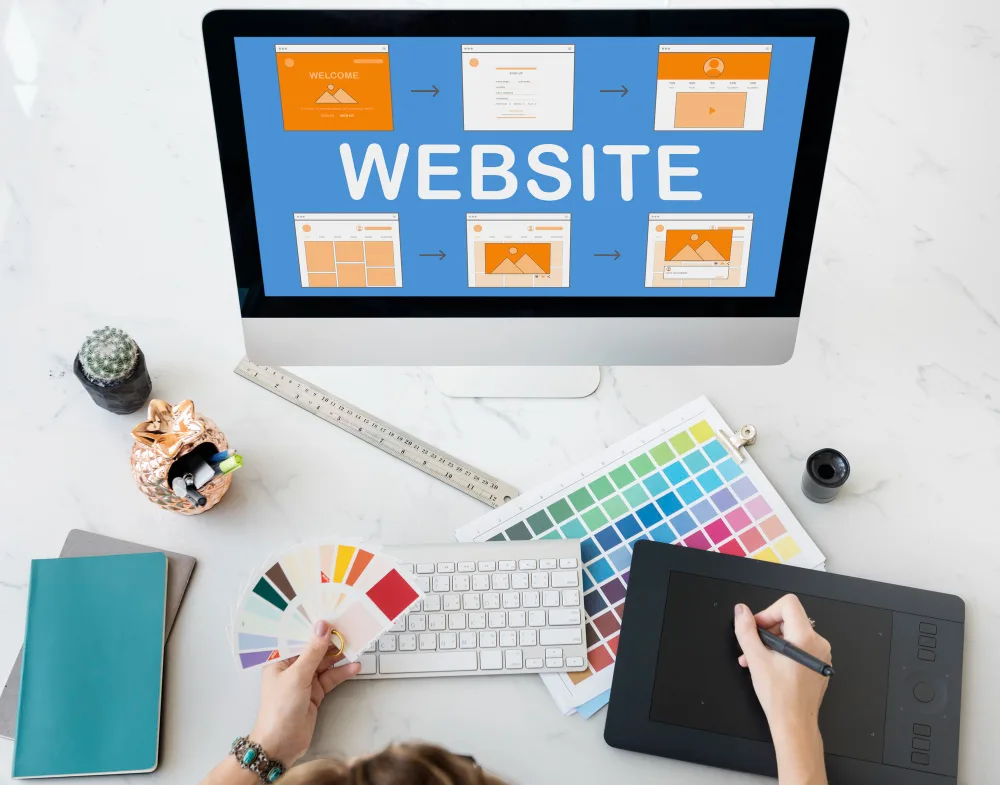
Trophy Developers plans, designs and develops responsive business websites that help the right customers understand your offer, trust your organisation and take the next useful action. We connect strategy, UX, content, SEO and GEO, development, analytics and business integrations so the website supports growth before and after launch.
Capabilities
What Web Design Includes
Web design should start with the business result
A professional website should do more than look modern. It should help people understand what you offer, find the information they need, trust the organisation and move toward a useful action. That action may be requesting a quotation, contacting a team, booking an appointment, buying a product, submitting an application or continuing into a digital service. We begin with the business goal before we choose layouts, visual styles or technology. We review the audience, customer questions, priority services, existing digital gaps and the actions that matter most. This gives every important page a clear purpose and reduces design decisions based on preference alone.
We design around how customers actually use the website
Visitors rarely arrive with the same level of knowledge or intent. Some need a quick answer. Others compare services, review proof, check pricing, evaluate technical capability or confirm whether your organisation can solve a specific problem. The website should support those different decision stages without becoming difficult to navigate. We organise navigation, page hierarchy, content order and interaction patterns around user needs. Important information appears where people expect it, related pages connect logically and calls to action remain visible without interrupting the experience.
Responsive web design for mobile, tablet, laptop and desktop
Responsive design requires more than shrinking a desktop page. Navigation, spacing, content density, image treatment, forms and calls to action may need to change as screen size changes. We design and test the experience across common device classes so customers can understand the offer and complete important tasks without fighting the interface. This matters for businesses in Uganda and international markets because visitors may arrive through different devices, browsers, connection speeds and usage contexts. The website should remain clear and usable across those conditions.
Design should strengthen the brand without getting in the way
Visual design shapes how quickly people judge credibility, but decoration should never overpower communication. We use typography, spacing, colour, imagery, motion and interface patterns to create a consistent experience that reflects the organisation while keeping the content easy to understand. For established brands, we work within the existing identity and improve how it translates to digital interfaces. For newer businesses, we can help create a practical visual direction that works across the website and related digital touchpoints.
Strong website content answers customer questions before they ask them
A visually polished website still underperforms when the copy is vague, repetitive or organised around internal company language instead of customer needs. We structure content around services, customer problems, proof, process, objections and next steps so each page contributes to the decision journey. Where content support forms part of the project, we can help shape page outlines, headings, service explanations, calls to action and supporting copy. The goal is not to fill space. The goal is to communicate clearly enough for people and search systems to understand what the business does.
SEO and GEO belong in the website foundation
Search visibility works better when the website architecture supports it from the beginning. We plan page topics, metadata, crawlable navigation, internal linking, structured content, image context, canonical rules, indexing controls and performance requirements as part of the build. For generative search and AI-assisted discovery, clear entities, direct answers, useful supporting detail and technically accessible content also matter. We treat GEO as an extension of strong SEO, content and information architecture rather than a separate shortcut. No web design company can responsibly guarantee rankings. Our role is to build a technically sound, useful and credible foundation that gives customers and search systems better information to work with.
Every important page should make the next step clear
A website cannot create demand by itself, but it can make existing demand easier to convert. We design inquiry paths around the action that makes sense for the business, from a simple contact request to a detailed proposal form, booking flow, product checkout or WhatsApp conversation. We also consider where users may hesitate. Clear service scope, relevant proof, helpful answers, visible contact options and well-timed calls to action reduce unnecessary uncertainty before someone reaches out.
Your website can support operations, not only marketing
Many organisations need the website to connect with the systems behind the business. A lead may need to enter a CRM. A payment may need to trigger confirmation. A booking may need to reach the right team. A customer may need access to an account, dashboard or service workflow. We map the public-facing experience against the operational steps that need to happen after a user takes action. Where the project requires it, we can connect forms, payments, CRM, WhatsApp, email, analytics, APIs and automation into a more complete digital workflow.
We choose the web technology around the project requirements
No single website platform fits every organisation. WordPress can work well when editorial flexibility and familiar content management matter. Next.js can suit performance-focused, integration-heavy or application-like experiences. E-commerce may require WooCommerce or a more custom commerce architecture. Some organisations benefit from a headless CMS when structured content must serve more than one digital experience. We review content workflows, integrations, security responsibilities, performance targets, hosting, internal capability and future development needs before recommending the stack. Technology should help the website remain useful and maintainable after launch.
Speed, accessibility and reliability are part of the experience
A website can look excellent and still frustrate users when it loads slowly, shifts while rendering, hides content behind heavy scripts or makes common interactions difficult. We make performance and accessibility part of design and development decisions rather than treating them as final-stage fixes. The exact technical work depends on the stack and project, but the objective stays consistent: deliver a stable interface, efficient assets, readable content and interactions that work for more users across real devices and network conditions.
A website redesign should improve the experience without discarding useful value
Established websites may already have indexed pages, backlinks, traffic history, analytics, forms and customer journeys that carry value. A redesign should identify that value before changing URLs or removing content. We review what should stay, what should improve, what can merge and what no longer serves a purpose. Where URLs change, we plan redirects to the most relevant destinations and validate important technical signals after launch. This reduces avoidable migration risk while still allowing the website to change substantially where it needs to.
Your team should understand how the website is managed after launch
A sustainable website needs clear responsibilities. We define how content updates work, who manages important accounts, what access the client receives and which services require ongoing renewal or support. This can include the CMS, domain, hosting, analytics, Search Console, payment accounts and other connected tools. The exact ownership model depends on the service and agreement, but it should never remain ambiguous. Clear access and renewal responsibilities reduce operational problems later.
Launch is the beginning of the website's operating life
Business needs continue after the website goes live. Content changes, campaigns, software updates, security work, analytics, search visibility and new integrations all create ongoing requirements. We can support the website after launch through hosting, maintenance, security, performance improvements, content work and future development according to the agreed service. Where applicable, Trophy Business Hub gives clients a clearer path for support, renewals and future upgrades so the website can keep evolving with the business.
Our web design process moves from discovery to launch in a clear sequence
Good website projects resolve the important questions before they become production problems. We move from business context into scope, architecture, UX, visual design, development, testing and launch. The exact sequence changes with project size, but each stage should reduce uncertainty for the next one. This process also makes responsibilities visible. Both teams know when content, feedback, approvals, integrations and launch decisions are required.
Web design for businesses and organisations with different operating needs
The right website architecture depends on the organisation behind it. A growing SME may need a focused lead-generation website. A larger company may need multiple departments, approval workflows and integrations. A public-sector organisation may prioritise information architecture, accessibility, public documents and service discovery. An e-commerce business needs product structure, payments and operational workflows. Trophy Developers works with business owners and delivery teams that need the website to support a real organisational goal, not only a visual refresh.
Why businesses choose Trophy Developers for web design
Our web design work sits inside a wider digital capability. That matters when a project needs content, search visibility, hosting, security, analytics, automation, payments, CRM connections, mobile applications or custom business systems alongside the public website. Instead of treating design as an isolated deliverable, we connect it with the technical and operational decisions that determine whether the website stays useful. This is especially valuable for organisations that expect the website to grow, integrate with other systems or support a wider digital transformation programme.
Start with the problem your website needs to solve
A useful web design proposal starts with context. Tell us what is not working today, who the website needs to serve, which services or products matter most, what systems it must connect to and what a successful launch should make easier for the business. We can then recommend the appropriate scope, platform, content structure, integrations and delivery path. You can also review selected Trophy Developers work, compare website pricing guidance or use our SEO and GEO audit tool to identify issues on an existing website before starting a redesign.
Investment
Scope the work around what the project actually requires
WordPress website with SEO/GEO visibility
Business websites, service pages, forms, and local visibility.
From UGX 800,000Custom modern website with CMS-ready structure
Premium websites requiring stronger UX, performance, and scalable content.
From UGX 3,400,000Advanced custom website, CRM, AI, payments, dashboards
Projects requiring integrations, automation, payments, CRM, or reporting.
From UGX 4,400,000+Project estimator
Estimate your Professional Web Design project path.
Choose the closest professional web design scope before sending your enquiry.
Proof
Relevant work and client reviews
Google Reviews
Client Feedback
Trusted by businesses and organizations in Uganda and beyond.
Trophy Developers supports teams with websites, SEO visibility, business systems, hosting, and ongoing digital operations built around practical outcomes.
Questions
Questions businesses ask before starting
What does a professional web design project with Trophy Developers include?
Scope varies by project, but a complete engagement can include discovery, information architecture, UX and UI design, responsive development, CMS implementation, content structure, SEO and GEO foundations, analytics, integrations, testing, launch support and ongoing maintenance. The proposal defines what is included for your specific project.
How does Trophy Developers start a web design project?
We start with the business goal, target audience, current website or systems, priority services, required functionality, content status, integrations and measurable launch priorities. We then define scope, responsibilities, technology and the recommended delivery path.
How much does professional web design cost in Uganda?
Cost depends on the amount and complexity of work. Page types, UX depth, content, e-commerce, payments, integrations, CMS requirements, migration, multilingual content, analytics, hosting and ongoing support can all affect the budget. Our website pricing page explains the main project tiers and scope factors.
How long does a professional website take to design and build?
The timeline depends on scope, content readiness, approval speed and technical complexity. A focused business website can move through a multi-week delivery cycle, while larger corporate sites, migrations, e-commerce platforms and custom systems need more time and may use phased delivery.
Can Trophy Developers redesign our existing website?
Yes. A redesign can improve UX, visual credibility, content structure, performance, CMS workflows, integrations, SEO foundations and conversion paths. For established sites, we first review important URLs, existing content, analytics and functionality so the redesign does not remove useful value blindly.
Can you redesign a website without losing its existing SEO value?
A careful migration can preserve much of the existing search foundation, but no provider can promise that rankings will never change. We review important URLs and content, map redirects where needed, check metadata and internal links, maintain analytics continuity and validate indexation signals after launch.
Do you include SEO and GEO in web design projects?
Yes, where relevant to the scope. We can build search and generative-discovery foundations into the architecture through metadata, headings, crawlable internal links, structured content, relevant schema, performance, image context, indexation controls and direct answers. Ongoing SEO or content campaigns can be scoped separately.
Can the website connect to payments, WhatsApp, booking or CRM?
Yes. Depending on the project, we can integrate contact forms, WhatsApp, booking workflows, payment systems, CRM routing, analytics, email automation, APIs and other business tools. We define these integrations in the project scope before implementation.
Do you build e-commerce websites in Uganda?
Yes. E-commerce work can include catalogue structure, product pages, checkout, payments, customer communication, analytics, administrative workflows and integrations. The right architecture depends on product volume, payment requirements, fulfilment and future growth.
Should our business use WordPress or Next.js?
The right choice depends on the website. WordPress can suit content-managed business websites and established editorial workflows. Next.js can suit performance-focused, integration-heavy or application-like experiences. We recommend the stack after reviewing content, editing needs, integrations, security, hosting and future development requirements.
Will our website work well on mobile devices?
Responsive behaviour forms part of the design and development process. We plan navigation, typography, content order, media, forms and calls to action for smaller screens and test the experience across multiple device ranges rather than one desktop and one phone size.
Do you provide hosting and maintenance after launch?
Yes. Hosting and maintenance can be included according to the project. Ongoing support may cover monitoring, backups, software maintenance, security work, content changes, performance improvements and future development. Where applicable, clients can also use Trophy Business Hub for support, renewals and future upgrades.
Do you work with clients outside Kampala or outside Uganda?
Yes. We can manage projects remotely with businesses, internal teams, diaspora stakeholders and international organisations. The website strategy should reflect the market and audience the organisation needs to serve, whether those users are in Uganda, East Africa or international markets.
What should we prepare before requesting a web design proposal?
Prepare the main business goal, target audience, current website if one exists, priority services or products, important functionality, known integrations, content status, preferred timeline and any budget guidance. You do not need a complete technical specification because discovery can turn the business requirements into a clear scope.
Next step
Discuss your web design requirements
- Send the service request.
- We review the fit, scope, and current constraints.
- We clarify the next practical project step.